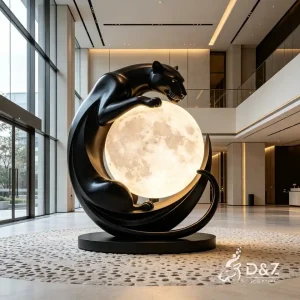
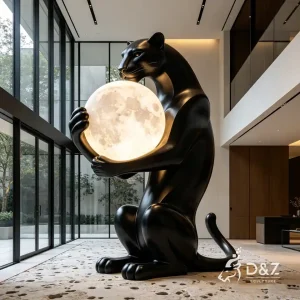
Garden sculpture is seen at close range, in changing light, surrounded by living material that grows around it. That makes it a different design problem from plaza work: proportion matters more than scale, and how the piece ages matters more than how it looks on delivery.
Materials that belong in planting. Corten is the natural fit — its rust tones sit beside foliage and timber, and it needs essentially no maintenance once the patina stabilises. Mirror-polished stainless does something different: it reflects the planting and sky, so the sculpture changes with the seasons around it. Bronze suits figurative garden work and develops a green patina over time.
Siting and foundations. Most garden pieces sit on a concrete pad below soil level, hidden by planting. We supply the pad dimensions, depth and bolt pattern with the drawings. For pieces over about two and a half metres, or anywhere exposed to wind across open lawn, we calculate the loading rather than estimating it.
Living with it. Mirror finishes show water spots and fingerprints and want an occasional wash. Corten stains paving beneath it during its first years, so we detail a gravel margin or drainage gap where it sits on stone.
Will it be stolen? Smaller pieces in accessible gardens are worth anchoring properly — we can supply concealed, tamper-proof fixings into a below-ground pad rather than a free-standing base, which makes removal impractical.
How big should it be? Almost always larger than first instinct. A piece viewed from twenty metres across a lawn needs real height to register. Send us the viewing distance and we will test proportions in 3D against a photograph of the actual setting.
Getting started. Send photographs of the setting and the viewing distance for a free concept and quote.